
Suggestion for the Government to Formulate a Practical Strategy to Boost Pulses Production
21-May-2026 06:57 PM
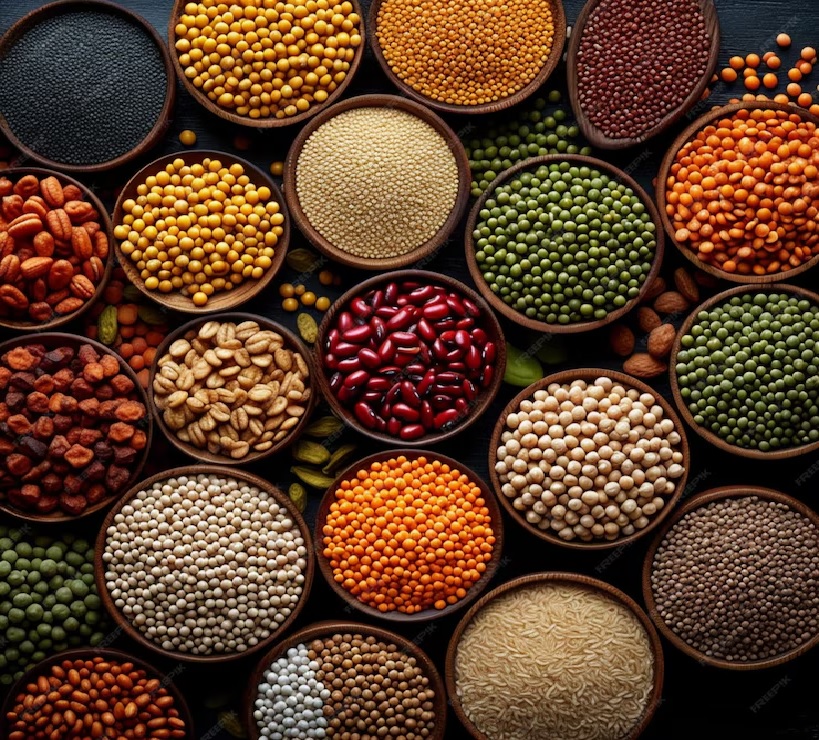
New Delhi. Over the past few years, the production of pulses in the country has either remained stagnant within a specific range or has been on a decline. Conversely, the domestic demand and consumption of pulses have been rising rapidly.
Consequently, to bridge the widening gap between demand and supply, the annual import of pulses in massive quantities from abroad has become necessary. This not only results in the outflow of valuable foreign exchange from the country but also deprives Indian farmers of adequate incentives to increase pulses production. This situation is bound to prove alarming for the future.
Pradeep Jindal, CMD of Jindal Overseas Corporation—a renowned and trusted company—has suggested that the Central Government formulate a concrete, timely, sustainable, and practical strategy as soon as possible to rapidly boost the domestic production of pulses, particularly gram (chana). Furthermore, he has urged the government to implement this strategy with utmost seriousness and on a war footing.
He asserts that unless farmers receive a price of ₹8,000–₹9,000 per quintal for gram, their enthusiasm and inclination toward increasing its production will not grow; indeed, for better production outcomes, it is essential that farmers remain content.
Pradeep Jindal has issued a warning that, much like the imports of edible oils—which are surging to new record levels while the government remains unable to curb them—the import of pulses could also rise precipitously in the future.
The country's dependence on edible oil imports has already risen to approximately 60 percent. While the dependence on pulses imports currently stands at around 20 percent, if immediate precautionary measures are not taken, this reliance could escalate to 50 percent within the next five to six years.
Currently, the country's annual consumption of pulses stands at approximately 30 million tonnes, a figure that could potentially reach 40 million tonnes in the future. At that juncture, increasing reliance on imports would remain the only viable option.