
Pulse Prices Remain Stable Amidst Weak Demand
06-May-2026 08:18 PM
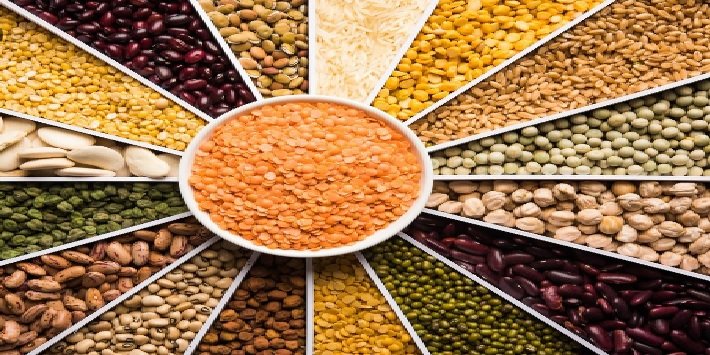
Mumbai: Due to a smooth supply and availability situation, coupled with a decline in demand and consumption, wholesale market prices for most major pulses remain stable within a specific range—often trading below the Government's Minimum Support Price (MSP). A sharp surge in prices appears unlikely in the near future.
The peak season for the supply of Rabi-season pulses—particularly Gram (Chana) and Lentils (Masur)—is currently underway. Additionally, arrivals of other pulse varieties, such as Black Gram (Urad) and Green Gram (Moong), are being observed in several states. The harvest of summer-season Moong and Urad crops is also set to begin shortly.
Although government agencies are procuring Gram and Lentils from farmers at the Minimum Support Price in several states, this has not yet created an upward trend in market prices. Recently, the Union Agriculture Minister announced an increase in the procurement target for Gram in Maharashtra to approximately 8.20 lakh tonnes (820,000 tonnes) and extended the procurement deadline until May 29; this move is expected to lend some stability to the market situation in the state.
The current season is not particularly favorable for the consumption of pulses and lentils. Consequently, pulse millers and processors are procuring pulses only in limited quantities to meet their immediate operational requirements. Traders and stockists, too, are displaying little enthusiasm for active trading. Regular imports of various pulses—including Gram, Lentils, Pigeon Peas (Tur/Arhar), and Black Gram—continue to arrive from overseas markets. However, Green Gram (Moong) is not imported into India, as a ban on its import has been in effect for a considerable period. Countries such as Canada, Australia, Myanmar, Brazil, and several African nations are making every possible effort to boost their pulse exports to India.
There are apprehensions that the production of pulse crops during the upcoming Kharif season could be adversely affected, as the influence of the El Niño weather pattern may result in a weaker Southwest Monsoon. Consequently, there is a possibility of reduced rainfall and the occurrence of drought-like conditions in several parts of the country.
Since the majority of pulse cultivation in India takes place in rain-fed regions, any irregularity or uncertainty in monsoon rainfall patterns could significantly impact the sowing process and the overall progress of the crops. Incidentally, government agencies hold substantial stocks of gram, tur, masoor, and moong, which will help maintain normal supply levels.