
Kharif Crop Sowing Area Lags Significantly Behind Last Year
29-Jun-2026 07:55 PM
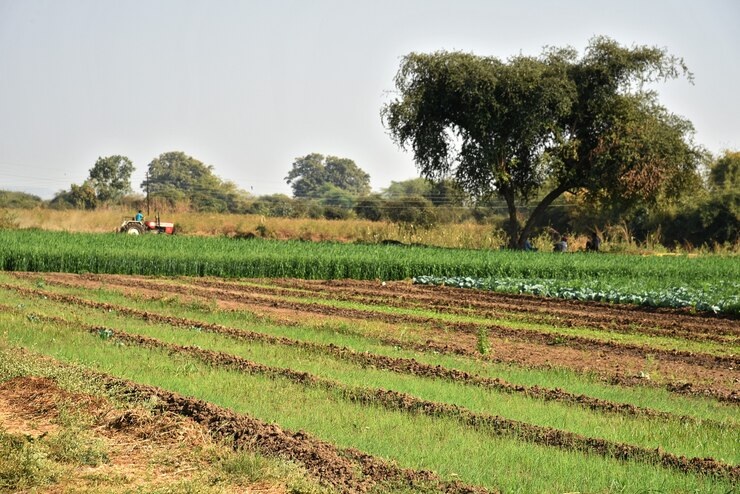
New Delhi. The pace of Kharif crop sowing is very slow across most of the country's major agricultural states due to the delayed arrival of the southwest monsoon and prevailing hot, dry weather conditions. Consequently, the total national sowing area for these crops reached only 182.72 lakh hectares by June 25, 2026—a shortfall of 53.74 lakh hectares compared to the 236.46 lakh hectares recorded during the same period last year. The monsoon has now begun to advance gradually.
According to the latest weekly data from the Union Ministry of Agriculture, compared to the previous year, the area under paddy increased from 21.46 lakh hectares to 25.75 lakh hectares, and sugarcane acreage improved from 56.54 lakh hectares to 57.31 lakh hectares. However, the sowing area for pulses fell from 21.46 lakh hectares to 14.92 lakh hectares; oilseeds dropped from 36.41 lakh hectares to 16.99 lakh hectares; coarse cereals slipped from 36.07 lakh hectares to 31.84 lakh hectares; and cotton acreage declined from 45.36 lakh hectares to 29.66 lakh hectares. Sowing figures for several crops have been disappointing.
Among pulses, the sowing area for crops like Tur (pigeon pea), Urad (black gram), and Moong (green gram) is lagging significantly behind last year's figures, despite the Central Government repeatedly urging farmers to increase acreage for these crops. Similarly, sowing for oilseeds like groundnut and soybean is trailing well behind last year's levels, contrary to earlier expectations of an increase in area.
Regarding coarse cereals, while the acreage for Jowar (sorghum) has seen a slight increase, the sowing area for Bajra (pearl millet) is lagging by 1.70 lakh hectares, and the area for maize is behind by 2.90 lakh hectares. July and August witness the highest rainfall and the peak sowing period for Kharif crops in the country; however, concerns are being raised that the area under Kharif cultivation might lag slightly behind last year's figures due to the monsoon's uncertain status caused by the impact of El Niño.