
Kharif Crops Face Greater Risk from Deficient Rainfall
08-Sep-2026 05:21 PM
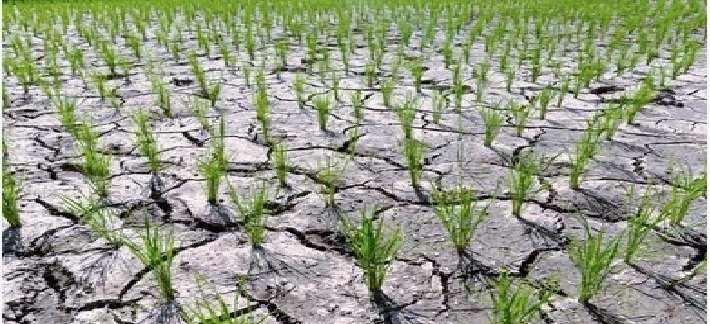
New Delhi: Although the cultivation area for Kharif crops has decreased by 1.77 million hectares—dropping from 11.04 million hectares last year to 10.863 million hectares this season (with significant declines in paddy, maize, ragi, castor, and moong)—agricultural experts believe that the overall production of Kharif crops is likely to be impacted more by the weak monsoon than by the reduction in sown area.
While most parts of the country received near-normal rainfall during July and August, total rainfall remained about 13 percent below the normal average due to a weak monsoon in June. Although more than two dozen states received good rainfall during the first seven days of the current month (September), a lack of rainfall might be felt in the coming days.
The real concern lies in South India. States such as Telangana, Andhra Pradesh, Karnataka, Tamil Nadu, and Kerala have not received adequate monsoon rainfall, and there is little expectation of heavy rain in the near future. These states are major producers of paddy, cotton, maize, sugarcane, and pulse and oilseed crops. The rainfall deficit threatens to adversely affect the average yield rates, total output, and quality of various Kharif crops. Insufficient rain has also prevented water levels in dams and reservoirs from rising significantly, meaning irrigation challenges will persist.
Compared to last year, the national cultivation area for paddy, coarse cereals, oilseeds, cotton, and sugarcane has declined this Kharif season, whereas the sown area for pulses—particularly urad and tur—has increased. Conversely, the area under paddy cultivation has shrunk by 1.637 million hectares, and the maize acreage has decreased by 0.3 million hectares. If weather and monsoon conditions remain favorable for the remainder of September, there may not be much cause for concern; otherwise, Kharif crop production could decline.