Home News
19-Oct-2026 05:10 PM
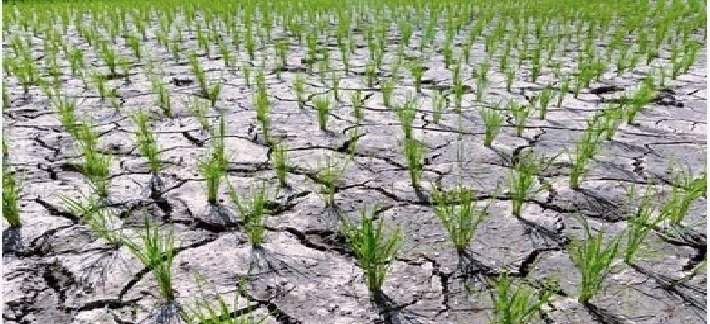
New Delhi. Data regarding weather and rainfall patterns suggest that the intensifying strength of El Niño could pose a serious threat to Rabi crops in the near future. Kharif crops have already suffered significant damage due to deficient rainfall, and the outlook for Rabi crops also appears far from encouraging.
It is important to note, however, that the sowing and growth of Rabi crops occur during the winter season; these crops rely on residual soil moisture, artificial irrigation, and winter rainfall. In contrast, Kharif crops must endure intense heat and are heavily dependent on monsoon rains.
Reports indicate that Kharif crops—particularly in Maharashtra and Karnataka—have sustained substantial damage due to the intensity of El Niño and weak southwest monsoon rainfall. El Niño could potentially have an even more severe impact on Rabi crops.
Deficient monsoon rainfall has left fields parched, which will hinder the sowing of Rabi crops. Furthermore, delayed sowing can negatively affect crop yields. The situation is somewhat better in North India; in states like Punjab,
Haryana, and Uttar Pradesh—as well as in Madhya Pradesh and Rajasthan—monsoon rainfall was near normal, and water levels in dams and reservoirs remain high, which should facilitate the sowing of Rabi crops without significant difficulty.
Meanwhile, South India is now receiving good rainfall from the northeast monsoon. While the production of crops such as wheat, barley, lentils, peas, and mustard is either non-existent or negligible in South India, other crops—including chickpeas—are cultivated there on a large scale.