
Impact of a Weak Monsoon
20-Jun-2026 11:06 AM
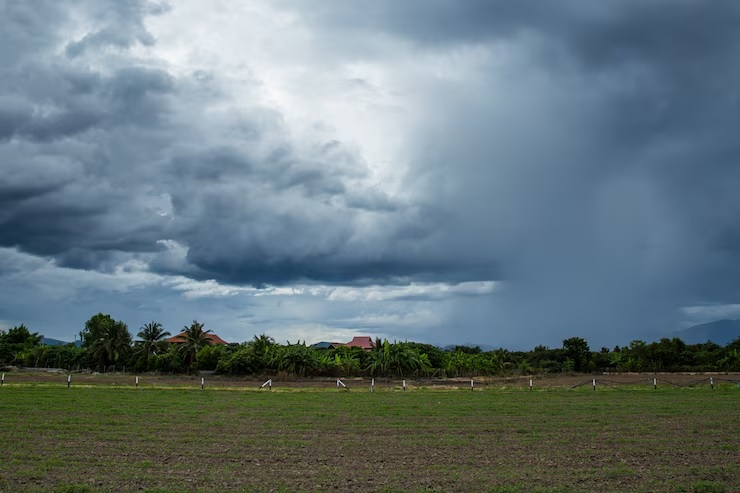
The US Climate Prediction Center has projected the persistence of a powerful El Niño this year, stating there is a 63 percent probability of it developing into a 'Super El Niño.' Typically, El Niño affects large parts of the world, including Asia, North America, South America, and Australia.
It has historically had a severe adverse impact on most of Australia and numerous countries across South and Southeast Asia. El Niño is considered particularly detrimental to the Indian monsoon. Originating in the Pacific Ocean, the current El Niño is obstructing the path of the Southwest Monsoon, resulting in a significant rainfall deficit across India.
This season, the monsoon is not only weak but is also advancing at a sluggish pace. There is no rapid formation of dense cloud clusters over the Bay of Bengal or the Arabian Sea, nor are wind flow conditions favorable in these regions.
While the situation may improve in the coming days, the national rainfall deficit is feared to rise to 40–45 percent in the interim. Unfortunately, water levels in the country's 166 major dams and reservoirs have also dropped to just 27–28 percent of their total storage capacity.
The Southwest Monsoon is considered the lifeline for Kharif crops. Rainfall during the four-month period from June to September has a direct positive impact on Kharif crops and an indirect positive effect on Rabi crops.
If a weak monsoon results in scanty, irregular, and uncertain rainfall—characterized by uneven distribution and prolonged dry spells—it will inevitably have a negative impact on Kharif crops, leading to reduced yields and lower overall production. Consequently, the risk of rising food inflation cannot be ruled out.