
Will Coriander Repeat the History of 2022 ?
25-Mar-2026 06:58 PM
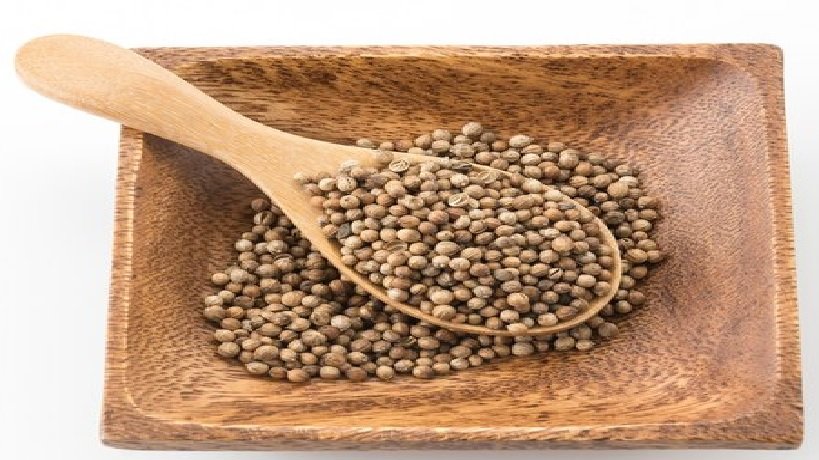
New Delhi. Over the past few days, coriander prices have been rising day by day—a trend that could prove to be a risky proposition. Sources indicate that the arrival of new stock at wholesale markets (mandis) in key production centers remains robust. Furthermore, due to the ongoing conflict in the Middle East, export demand remains subdued. A liquidity crunch has also led to sluggish off-take in the spot market; yet, despite these factors, prices continue to rise—a phenomenon that defies logical explanation. Traders believe that the current bullish trend is driven solely by speculative activity, which could turn into a loss-making venture in the days to come.
The Year 2022
It is noteworthy that a similar situation prevailed during the year 2022. According to available information, in April 2022, the inflow of stock into the markets was strong; however, prices continued to surge. Consequently, rates for 'Eagle' quality coriander in the markets were being quoted at a peak of ₹115–120, while the 'Badami' variety touched a high of ₹110–115. At that time, the prevailing market sentiment suggested that the price of the 'Eagle' variety would eventually breach the ₹145–150 mark. Acting on this expectation, stockists accumulated large inventories at these elevated prices. As a result, these stockists ultimately incurred significant financial losses.
The Current Season
While it is true that coriander production within the country is expected to be lower during the current season, a sharp surge in prices precisely at the time when new stock is arriving in the markets invariably proves detrimental. It is worth noting that since 2023, the overall yield of coriander in the country has been on a downward trajectory. According to available information, the yield in 2023 stood at 16 million bags; this figure subsequently declined to 12 million bags in 2024 and further to 11 million bags in 2025. Meanwhile, the yield for 2026 is estimated to be between 9.5 and 9.7 million bags (with each bag weighing 40 kg).
Possibility of Profit-Booking
Market experts suggest that profit-booking is likely to occur in the markets at current high price levels, which is expected to lead to a decline in prices during April. It is noteworthy that most markets (mandis) in Gujarat are currently closed for holidays, while markets in Madhya Pradesh are also set to begin their holiday period during the current week. Consequently, once the markets reopen in April, there will be increased pressure from fresh arrivals. This will result in a decline in prices—though not a significant one—as the total domestic availability of coriander during the current season is expected to remain lower than the actual consumption demand. Sources indicate that the combined requirement for exports and domestic consumption amounts to approximately 15 million bags; however, during 2026, the total availability—comprising a carry-over stock of 2 to 2.5 million bags and the new harvest of 9.5 to 9.7 million bags—is projected to be only around 12.5 million bags. As a result, prices are expected to remain firm throughout 2026.