
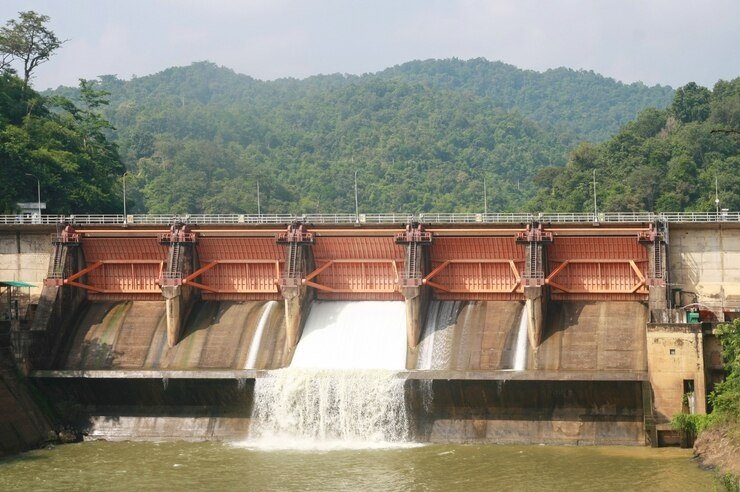
The water levels in major dams and reservoirs across India have decreased to 73% of their total storage capacity, according to the Central Water Commission (CWC). This decline is attributed to the lack of rainfall in most parts of the country over the past week.
While December 2024 saw the highest rainfall recorded since 2001, it mostly benefited the southern states, leaving other regions with decreasing water levels over the past six weeks. This could raise concerns about water availability in the future.
Despite a significant drop in rainfall in November (55% less than the normal average), the rainfall from October to December was close to the average. This has resulted in improved conditions for Rabi crops, particularly in December.
However, the Meteorological Department has forecasted below-normal rainfall for January 2025, and a further decrease is expected in the January-March quarter, which may worsen the situation.
As of the current week, the water level in the country's 155 major dams and reservoirs stands at 132.293 billion cubic meters (BCM), which is 73% of the total storage capacity of 180.852 BCM.
This level, while lower than previous weeks, is still 25% higher than last year and 19% above the ten-year average.
However, water levels are declining across all regions, with 10 reservoirs completely full and 20 holding less than 50% of their water capacity.