
Monsoon Reaches Most of the Country, but Northeast Still Awaits Rain
07-Jul-2026 12:41 PM
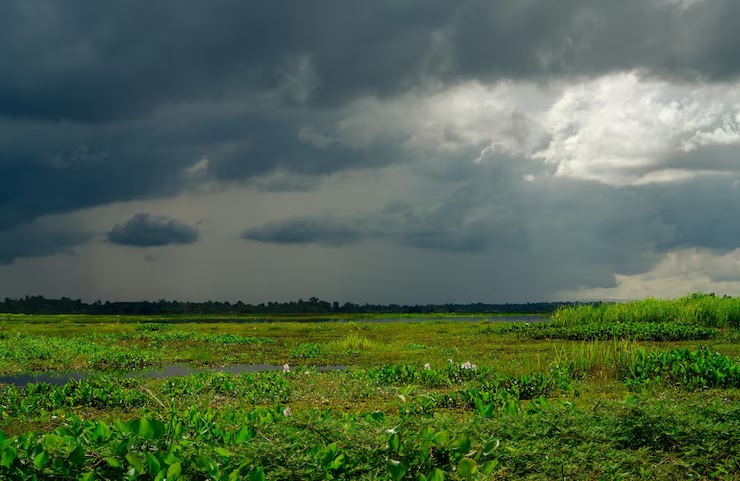
New Delhi: After remaining stagnant or sluggish for a prolonged period, the Southwest Monsoon has now strengthened and become active, reaching almost the entire country. Consequently, many states are receiving good rainfall, though several areas in Northeast India are still waiting for rain. While there was a significant deficit in monsoon rainfall during the initial month of the season (June), substantial rainfall in July has considerably narrowed this gap.
In Central India and the Southern Peninsula—regions most affected by the lack of rain in June—the rainfall deficit relative to the long-period average has now dropped to 14 percent. The Southwest Monsoon has also become active in the northwestern states, reducing the rainfall deficit there to 22 percent; this gap is likely to shrink further. However, the eastern and northeastern parts of the country are grappling with a severe rainfall deficit, which has risen to 42 percent.
Paddy cultivation is predominant during the Kharif season in Eastern India, a crop that requires significant amounts of water. A continued lack of rainfall there could lead to a serious situation. However, as the region is flanked by the Bay of Bengal on one side and the Himalayan mountains on the other, there is usually a persistent likelihood of rainfall.
The northern limit of the monsoon is currently passing through Jamnagar, Udaipur, Ajmer, Jhunjhunu, Hisar, and Bhatinda, bringing heavy rainfall—either ongoing or imminent—to many areas across Gujarat, Rajasthan, Haryana, and Punjab. This will help farmers accelerate the sowing of Kharif crops in these regions.