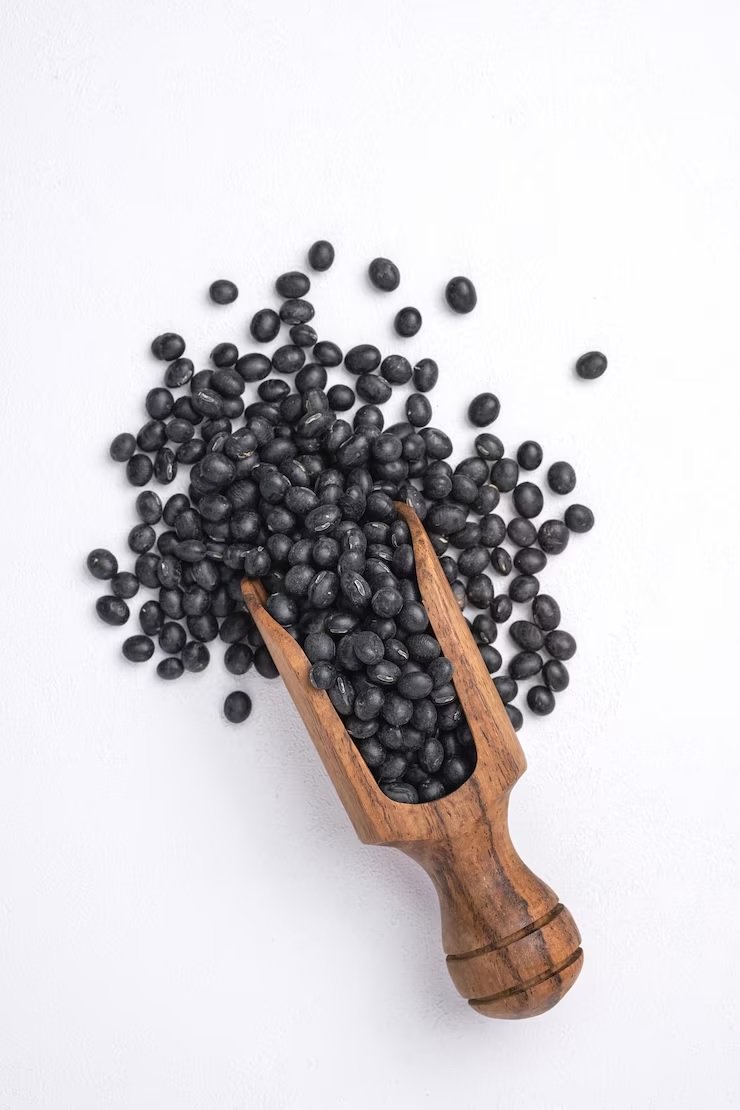
Urad prices decline amid increased selling and weak demand; prospects for a sharp downturn limited by high import costs
Chennai. Urad prices in the domestic market trended downward this week, driven by increased selling from stockists at higher price levels and subdued buying by pulse millers. Due to relatively weak demand for Urad dal, pulse mills are currently purchasing only what is strictly necessary, which has failed to provide sufficient support for any price rally. However, a rise in Urad prices in Burma has increased the landed cost of imports, which is likely to limit the scope for any significant decline in domestic market prices. Meanwhile, arrivals of domestic Urad in producing-region markets have increased compared to last week, and shipments of imported Urad continue to arrive. Furthermore, the growing availability of Urad from Brazil is expected to bolster domestic supply, which could act as a check on price increases. With the wedding season underway, consumption of Urad dal is expected to rise, potentially leading to an improvement in procurement by pulse mills. Nevertheless, the current limited buying by mills means the market lacks the expected demand support. In the coming days, the direction of Urad prices will depend on the progress of Rabi Urad sowing and crop conditions in Madhya Pradesh, Andhra Pradesh, and Tamil Nadu. Additionally, sowing trends, production prospects, and export availability in Myanmar will also influence the domestic market. Due to increased selling by importers and persistent, limited demand, Urad prices in Chennai saw a decline of Rs 50–100 per quintal this week; by the end of the week, prices stood at Rs 9,100 per quintal for FAQ (Fair Average Quality) and Rs 10,050 per quintal for SQ (Special Quality).
Burma
Due to increased selling by exporters and sluggish export demand, prices for Burmese Urad (black gram) saw a decline of $5 per tonne for the FAQ (Fair Average Quality) variety and $10 per tonne for the SQ (Special Quality) variety this week. By the end of the week, prices stood at $965 per tonne for FAQ and $1,050 per tonne for SQ.
Delhi
Reflecting the decline at the ports and weakened demand, Urad prices in Delhi fell by Rs 125 per quintal for the FAQ variety and Rs 150 per quintal for the SQ variety this week. Consequently, by the end of the week, prices were Rs 9,475 per quintal for FAQ and Rs 10,500 per quintal for SQ.
Madhya Pradesh
Due to consistent availability in producing markets and sluggish demand, Urad prices in Madhya Pradesh remained unchanged this week. By the end of the week, prices were as follows: Jabalpur Rs 5,000–9,500, Kareli Rs 6,300–8,401, Damoh Rs 6,000–8,400, Ashoknagar Rs 4,000–8,000, Ganjbasoda Rs 4,500–7,500, and Indore Rs 6,500–9,500 per quintal.
Maharashtra
Due to weak buying interest, Urad prices in Maharashtra declined by Rs 100–200 per quintal this week. By the end of the week, prices stood at Rs 10,200 in Akola, Rs 8,000–9,800 in Latur, Rs 8,000–10,200 in Jalgaon, Rs 8,000–8,800 in Barshi, and Rs 7,000–9,000 per quintal in Ahmednagar.
Others
Due to a broad-based decline and weak buying interest, prices of urad (black gram) in Krishna District and Vijayawada fell by Rs 100 per quintal this week. By the end of the week, prices stood at Rs 9,500 per quintal in Krishna District and Rs 9,700–9,800 per quintal in Vijayawada. Conversely, prices of urad from Rajasthan saw an increase of Rs 200 per quintal this week; by the weekend, prices reached Rs 7,700–8,700 per quintal in Jaipur and Rs 6,000–8,500 per quintal in Kota.
Urad Dal (Split Black Gram)
Due to sluggish demand, there was no fluctuation in the prices of urad dal this week. By the weekend, prices remained stable at Rs 11,300–12,750 per quintal in Delhi, Rs 11,300–12,200 per quintal in Bhatapara, Rs 12,550 per quintal in Jalgaon, Rs 10,300–11,300 per quintal in Meerut, and Rs 11,500–12,300 per quintal in Vijayawada.