
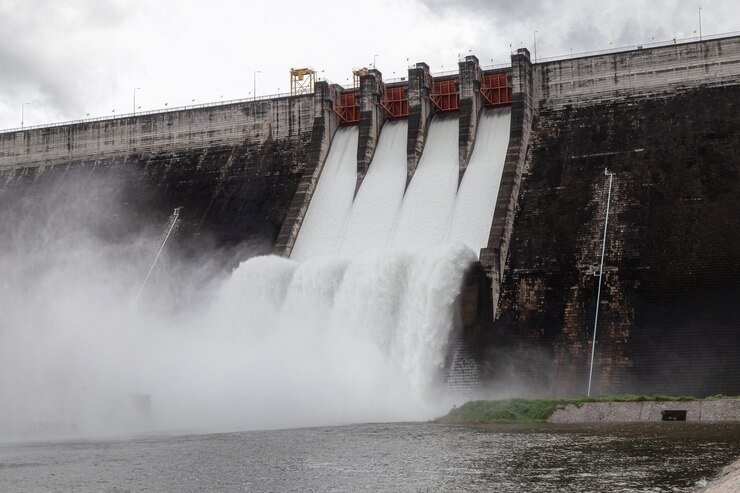
The water levels in dams and reservoirs across India have dropped to 75% of their total storage capacity due to a decrease in the north-east monsoon activity.
As of September 26, the total water stock in 155 major dams and reservoirs was recorded at 135.404 billion cubic meters (BCM), out of a total capacity of 180.852 BCM. While this is a reduction, it still represents a 24% increase compared to the same period last year.
The situation is particularly concerning in the northern region, where the water stock has fallen to just 9.151 BCM, which is only 46% of the total storage capacity of 19.836 BCM.
This indicates a severe water shortage in the area. Furthermore, the number of dams and reservoirs at full capacity has decreased from 13 to 10, while those with less than 50% water have increased from 18 to 19.
The Indian Meteorological Department (IMD) reported that from October 1 to December 15, 62% of the country's 721 districts received below-normal or negligible rainfall, contributing to water shortages.
The lack of rain has also affected the Rabi crop area, with the total area under cultivation slightly shrinking from 590.97 lakh hectares last year to 590.82 lakh hectares this year.
However, there has been some positive rainfall in the north-western part of India, which is currently experiencing good weather conditions.