Home News
22-Oct-2026 05:31 PM
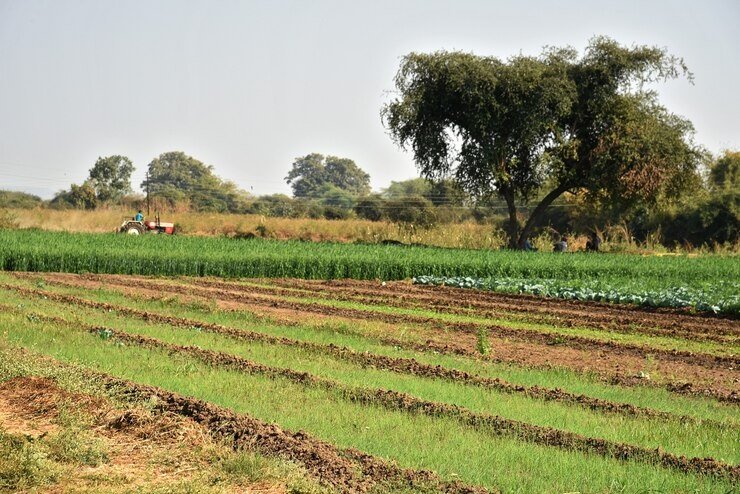
New Delhi. Sowing of Rabi (winter-season) crops has commenced in some states across the country; however, the current pace is notably slower than that of last year. According to data from the Union Ministry of Agriculture, the total area sown with Rabi crops nationwide reached 3.43 lakh hectares by last week—a decrease of 1.22 lakh hectares, or 26 percent, compared to the 4.65 lakh hectares recorded during the same period last year.
Cultivation has begun only in a few states and for select Rabi crops, though sowing activity is expected to gain momentum across all states in the coming weeks. Ministry of Agriculture data indicates that the sowing of wheat—the most significant food grain of the Rabi season, which typically occupies the largest cultivation area—has not yet begun.
In addition to wheat, the sowing of pearl millet (bajra), finger millet (ragi), green gram (moong), sunflower, and safflower has yet to commence; for other crops where sowing has started, the total area covered remains very small. As for paddy, pulses, and oilseeds, cultivation has already begun in some states.
During the period under review, the area under paddy cultivation fell by 34 percent, from 1.34 lakh hectares to 88,000 hectares. The area sown with chickpea (chana) reached 6,000 hectares, whereas no sowing had taken place by this time last year. The total area under Rabi pulses increased by 50 percent—from 10,000 hectares last year to 15,000 hectares this year.
The area under sorghum (jowar) stands at 8,000 hectares, and maize covers 2,000 hectares—figures roughly equivalent to those from last year. The area sown with barley has reached 1,000 hectares. Mustard, the most prominent oilseed crop of the Rabi season, saw its sown area decline by 27 percent—from 3.10 lakh hectares last year to 2.26 lakh hectares this year. The area under groundnut cultivation has increased.