
Pulse Market Stable Due to High Buffer Stocks and Regular Imports
03-Jul-2026 05:26 PM
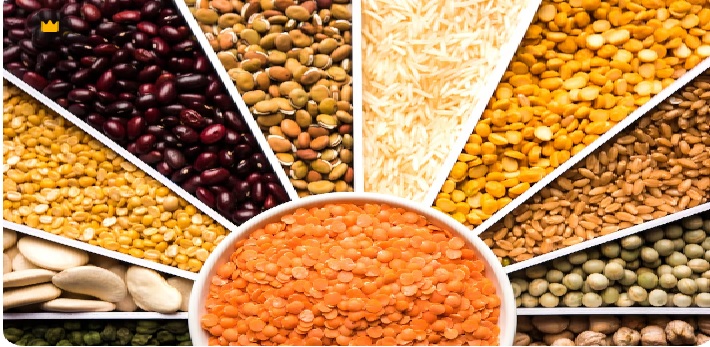
Mumbai: Despite below-average monsoon rainfall and a sluggish pace of Kharif crop sowing, domestic market prices for pulses are expected to remain stable within a specific range—with only limited fluctuations—in the near future. This stability is attributed to the government holding substantial pulse stocks and the continued regular import of various pulses from abroad. The supply situation is likely to remain comfortable, driven by expectations of strong production in key exporting nations.
According to informed sources, domestic demand for pulses has been weak since March, keeping prices under pressure. Wholesale market prices for most pulses continue to hover at or below the Minimum Support Price (MSP).
The head of the apex trade body, the India Pulses and Grains Association (IPGA), stated that excellent pulse production is projected in regions such as Africa, Myanmar, Brazil, Australia, and Canada, ensuring India faces no difficulty in increasing imports.
There is no import duty on Tur (pigeon pea) and Urad (black gram), while domestic Chickpea (Chana) and Lentil (Masur) attract a duty of only 10–11 percent. A 30 percent customs duty is levied only on the import of yellow peas.
During the 2025-26 fiscal year, India's total pulse imports declined by approximately 17 percent compared to 2024-25, settling at around 6 million tonnes (60 lakh tonnes). Attention is now focused on imports for the 2026-27 period. In 2025-26, the country imported over 1.48 million tonnes (14.80 lakh tonnes) of Tur, with imports from Africa accounting for 1.11 million tonnes (11.10 lakh tonnes). Similarly, a total of 0.781 million tonnes (7.81 lakh tonnes) of Urad was imported, with 0.54 million tonnes (5.40 lakh tonnes) coming from Myanmar.