Home News
18-Sep-2026 07:27 PM
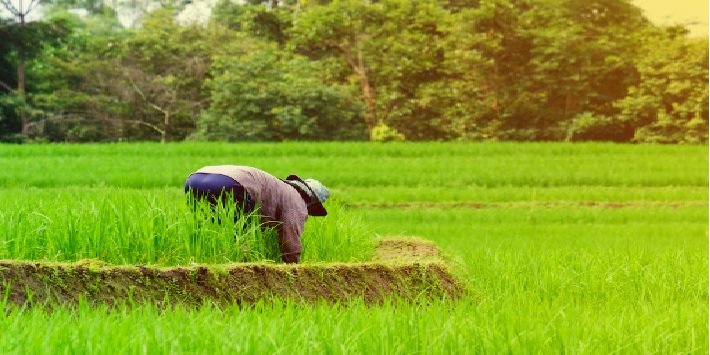
New Delhi. Paddy cultivation area has witnessed a sharp decline this season due to a severe deficit in monsoon rainfall across the four major producing states of South India: Karnataka, Telangana, Andhra Pradesh, and Tamil Nadu. Additionally, paddy acreage in other states—including Madhya Pradesh, Uttar Pradesh, Maharashtra, and Jharkhand—is trailing behind last year's figures.
Consequently, the total national area under this vital food grain crop has dropped to 429.28 lakh hectares, marking a reduction of 16.64 lakh hectares compared to the 445.92 lakh hectares recorded during the same period last year. Last week, this deficit was estimated at 16.97 lakh hectares.
While the current paddy cultivation area remains well above the five-year average of 405.36 lakh hectares, it lags behind last year's figures. The primary reason for this is that paddy acreage had surged to an all-time high during the 2025-26 Kharif season, driven by favorable monsoon rainfall that fully supported farmers.
Compared to last year, the acreage for Basmati and 'A' Grade (premium quality) paddy has decreased, whereas the area under common-grade paddy has remained largely stable.
Sub-par monsoon rainfall expected in September could impact the paddy crop and lead to a significant drop in rice production; high-quality paddy and rice varieties are particularly likely to see a sharper decline in output. The government currently holds adequate rice stocks. As paddy cultivation has now reached its final stage, a further increase in acreage appears unlikely.